
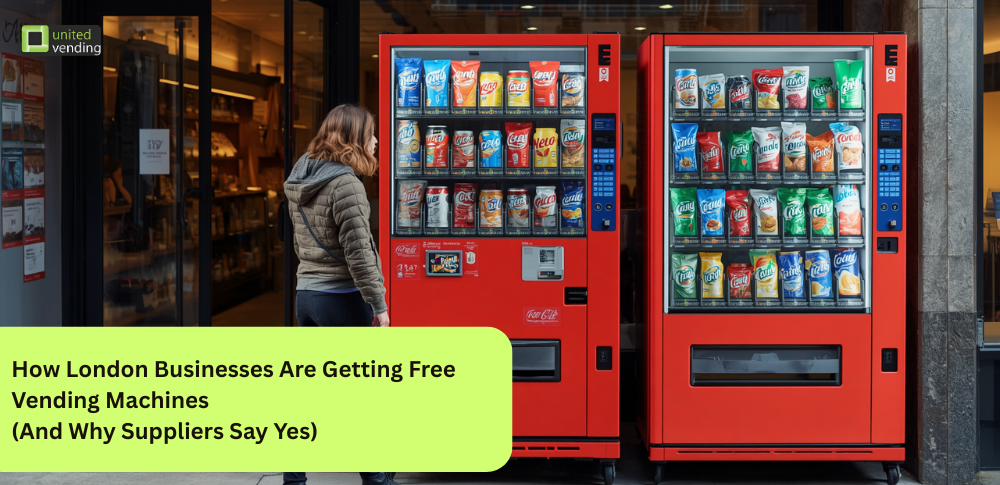
Many businesses assume vending machines require a large upfront investment, ongoing maintenance costs, and long-term commitments. In reality, many suppliers now offer free vending machines London businesses can use without purchasing the equipment, making workplace refreshments far more accessible.
The reason is simple. Suppliers earn revenue from product sales while businesses gain a convenient service for employees and visitors. Understanding how this model works helps companies decide whether a free on-loan vending machine is the right solution for their workplace.
What Does “Free On-Loan” Really Mean?
A free on-loan vending machine means the supplier installs and owns the machine while taking responsibility for servicing and maintenance. The business provides a suitable location with sufficient demand but does not purchase the equipment.
This arrangement benefits both parties because the supplier generates income from products sold, while the business avoids significant capital expenditure. Providers such as United Vending follow this model to help businesses offer convenient workplace refreshments without the cost of buying equipment.
Why Suppliers Are Happy to Provide Free Vending Machines London Businesses Need
Suppliers invest in locations where regular customer demand creates consistent product sales over time. Busy offices, warehouses, manufacturing facilities, schools, and business parks often generate enough daily purchases to make the arrangement commercially viable.
Instead of relying on equipment sales, suppliers build long-term income through regular vending purchases. This is why they carefully assess each location before approving a free installation, ensuring the solution benefits both the business and the supplier.
Which Businesses Usually Qualify?
Not every workplace generates enough demand for a fully managed vending service. Suppliers typically assess expected daily usage before recommending the most suitable machine.
Common qualifying locations include corporate offices, distribution centres, hospitals, hotels, education facilities, large retail sites, shared office buildings, leisure centres, transport hubs, and manufacturing plants with consistent employee numbers.
What Services Are Normally Included?
Most managed vending agreements extend beyond simply delivering a machine. A quality supplier monitors performance to keep products available and equipment operating efficiently.
Typical services include installation, scheduled restocking, maintenance, repairs, and product selection reviews. United Vending, for example, offers fully managed vending services so businesses can focus on their operations rather than machine maintenance.
Choosing the Right Vending Supplier
The lowest price should not be the only consideration. Reliable service often has a greater impact on employee satisfaction than the machine itself.
Before selecting a supplier, ask about service response times, refill schedules, product variety, payment options, and contract flexibility. A supplier with local experience, such as United Vending, can often provide responsive support and tailored vending solutions across London.
Are There Any Limitations?
Free vending machines are not suitable for every location. Small offices with very few employees may not generate enough sales to justify installation.
Businesses should also understand who owns the equipment, how servicing is scheduled, and what happens if the machine consistently underperforms before agreeing to the service.
Conclusion
The growing popularity of free vending machines London businesses use is based on a practical commercial model rather than a promotional offer. Suppliers benefit from ongoing product sales, while businesses receive professionally managed refreshment services without purchasing expensive equipment.
For organisations with sufficient daily demand, a free on-loan vending machine can provide convenient access to drinks and snacks while reducing administrative effort.
FAQ
1. How do free vending machines London suppliers make money?
Suppliers usually earn revenue from the snacks, drinks, and coffee sold through the machine rather than charging businesses for the equipment. This makes locations with consistent daily usage the most attractive.
2. Do businesses need to sign a long-term contract?
Not always. Some suppliers operate with flexible agreements instead of lengthy contracts, although terms vary depending on the provider and location. Always review the agreement before installation.
3. Can small offices get a free vending machine?
Possibly, but approval depends on expected demand. Suppliers normally assess employee numbers, visitor traffic, and available space before deciding whether a location is commercially suitable.
4. Who maintains and repairs the vending machine?
With most managed services, the supplier remains responsible for servicing, repairs, and routine maintenance. Businesses simply report any issues while the supplier handles the technical work.
5. Can businesses choose what products are stocked?
Yes. Many suppliers allow businesses to request specific snacks, drinks, healthier choices, or coffee selections and may adjust stock based on purchasing patterns over time.
6. Are contactless payments available?
Many modern vending machines support contactless card and mobile payments alongside traditional payment methods, making purchases quicker and more convenient for employees and visitors.