
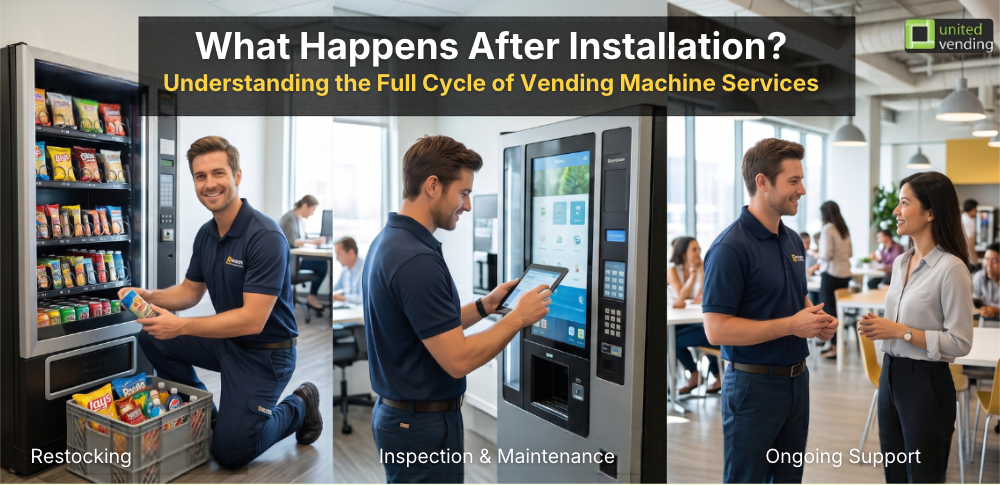
Once a vending machine is installed, most businesses assume the hard part is done. In reality, what happens after installation is what determines whether the machine becomes a genuine workplace asset or a source of ongoing frustration. Good vending machine services cover far more than the initial setup, and understanding that full cycle helps you choose the right provider from the start.
The Installation Is Just the Beginning
There’s a tendency to treat installation as the finish line. The machine arrives, it gets plugged in, it’s stocked up, and everyone’s happy for the first week. But a vending machine is a piece of equipment that runs continuously, handles food and drink, processes payments, and gets used by dozens, sometimes hundreds of people every day. It needs ongoing attention to keep performing at that level.
The businesses that get the most out of their machines are the ones that understand what a full vending machine services package actually involves. Not just what goes in the machine, but how it’s monitored, maintained, restocked, and replaced when something goes wrong.
Restocking: More Science Than It Looks
Why Timing Matters
Restocking is the most visible part of vending machine services, and it’s easy to underestimate how much thought goes into doing it well. A machine that runs out of popular products by Wednesday when it’s not scheduled for a restock until Friday isn’t serving your staff; it’s just taking up space.
Good providers monitor usage patterns over time and adjust restocking frequency accordingly. A machine in a busy London office will need more frequent visits than one in a quieter environment. Footfall changes seasonally too, a reduced team over the Christmas period means different demand than a full building in September.
Product Rotation and Freshness
Restocking isn’t just about filling empty coils. It involves rotating stock so that older products are moved to the front and newer ones placed behind, the same logic as any food retail operation. Products that consistently sit untouched need to be swapped out for alternatives that actually sell.
A supplier who pays attention to what moves and what doesn’t, and adjusts the product mix accordingly, adds real value. One who simply refills whatever was there before, regardless of how well it’s selling, doesn’t.
Maintenance: The Work That Keeps Things Running
Routine Servicing
A vending machine contains a lot of moving parts: motors, coils, refrigeration units, payment systems, dispensing mechanisms. Routine servicing keeps these components working properly before they become a problem. This includes cleaning internal components, checking refrigeration temperatures, testing payment systems, and inspecting dispensing mechanisms for wear.
For vending machine services that handle hot drinks, there’s an additional layer of maintenance around the brewing and heating system. Coffee machines in particular need regular descaling and cleaning to maintain both performance and hygiene standards.
Reactive Repairs
Even well-maintained machines develop faults. A payment reader stops accepting contactless. A coil gets jammed. A refrigeration unit loses temperature overnight. When these things happen, response time is everything.
For London businesses, this is where local supplier coverage makes a significant difference. A provider operating within the M25 can reach most sites far faster than a national operator dispatching an engineer from outside the city. A machine that’s out of service for two days is a source of genuine frustration for staff, and a reflection on whoever made the decision to install it.
United Vending operates locally across London, which keeps response times short when something needs attention.
Hygiene and Compliance
This is a part of vending machine services that rarely gets discussed openly but matters considerably, particularly for machines dispensing food and hot drinks.
Cleaning Schedules
The interior of a vending machine, particularly the dispensing area and any surfaces that come into contact with food, needs to be cleaned on a regular schedule. This isn’t just good practice; for machines in certain environments such as healthcare settings, schools, or food-preparation areas, it’s a compliance requirement.
A proper service provider will have documented cleaning schedules and be able to provide evidence of cleaning if requested. If you’re in a regulated environment and your vending supplier can’t tell you when the machine was last cleaned, that’s a problem worth addressing.
Temperature Monitoring for Cold and Fresh Products
For machines stocking chilled drinks or fresh food products, temperature monitoring is an ongoing requirement. Machines should be checked regularly to ensure refrigeration is maintaining safe temperatures, and any deviation should trigger an immediate service visit.
This is part of what separates a managed vending machine service from simply owning a machine and hoping for the best.
Payment System Management
Cashless payment has become the default expectation in most London workplaces. Card readers, contactless terminals, and in some cases app-based payment systems all need to be kept up to date and functioning reliably.
Payment system failures are one of the most common sources of complaints about vending machines. A machine that accepts cash but not contactless will frustrate the majority of users who no longer carry coins. A card reader that’s offline intermittently erodes trust in the machine even on the days it works.
Keeping payment systems current, including software updates and hardware replacement when readers become outdated is part of a thorough vending machine services package. It’s worth confirming explicitly that your supplier covers this rather than assuming it’s included.
Monitoring and Reporting
Remote Monitoring
Many modern vending machines can transmit real-time data on stock levels, sales by product, temperature, and fault alerts. This allows suppliers to monitor machine performance remotely and respond proactively rather than waiting for someone to report a problem.
Remote monitoring also improves restocking efficiency. Rather than visiting on a fixed schedule regardless of stock levels, the supplier can see exactly what’s running low and prioritise accordingly. For a business in London where staff rely on the machine throughout the day, this kind of responsiveness is worth more than it might initially appear.
Reporting for the Business
Some providers offer basic reporting to the business on what’s selling and when. This isn’t essential, but it’s useful context, particularly if you’re managing multiple machines across a site and want to understand which locations are performing and which aren’t earning their floor space.
End of Life and Machine Replacement
Vending machines have a working lifespan. Components wear out, technology becomes outdated, and at some point a machine needs to be replaced rather than repaired. Part of a full vending machine services package is understanding what happens at that point.
With a free on-loan model, the arrangement United Vending operates on, machine replacement is handled by the supplier rather than the business. There’s no capital outlay when a unit reaches the end of its useful life, and no negotiation required about residual value. The supplier simply replaces it.
For businesses that own their machines outright, this transition point can be a significant and unexpected cost. It’s one of the more practical reasons why a managed service arrangement tends to work out better for most London workplaces over the long term.
Good Service Is Invisible; Until It Isn’t
The mark of genuinely good vending machine services is that the business never has to think about the machine. It’s stocked, it’s clean, it works, and when something goes wrong it gets fixed quickly. Staff use it without complaint and facilities managers don’t field questions about it.
That kind of seamless service doesn’t happen by accident. It’s the result of a provider who takes the full cycle seriously; not just the installation, but everything that comes after. United Vending has been managing that full cycle for London businesses for over fifteen years, handling restocking, maintenance, hygiene, and repairs so that the machine simply works. No contracts, no upfront cost, and no operational burden landing back on your desk. If that sounds like what your workplace needs, get in touch and the team will walk you through how it works.
FAQs
- What does a vending machine service include?
A full vending machine service covers restocking, routine maintenance, reactive repairs, hygiene cleaning, payment system upkeep, and temperature monitoring for chilled machines. The scope varies by provider, so it’s worth confirming what’s included before agreeing to anything. - How often should a vending machine be serviced?
Routine servicing is typically carried out every one to three months depending on usage, with reactive visits as needed when faults arise. High-traffic machines in London workplaces may require more frequent attention than those in quieter environments. - Who is responsible for vending machine repairs?
With a managed service or free on-loan arrangement, the supplier handles all repairs at no cost to the business. If you own the machine outright, repair costs fall to you, either through a service contract or on an ad hoc basis. - What happens if a vending machine breaks down?
A local supplier should be able to respond within a short timeframe, often the same day for straightforward faults. Response time is significantly faster with a London-based provider than with a national operator covering a wide geographic area. - Is vending machine hygiene a legal requirement?
Machines dispensing food and drink are subject to food hygiene standards. In regulated environments such as healthcare or education settings, documented cleaning records may be required. Any reputable vending machine service provider should be able to evidence their cleaning schedule on request.